
About Us
Thirty years of information technology education publishing in Nigeria, 1996–2026.


Publisher’s Welcome Statement

Aflon Books is delighted to welcome every Nigerian to www.aflon.org, our online library of textbooks for junior and senior secondary school. The website brings together, in one place, the full range of Aflon Self-Study Learning Books, written for students from JSSC 1 to SSSC 3. Under the motto “Books for Bright Minds”, it is the place where students, parents, teachers, school owners and education authorities can find our books, look inside them, and order the titles they need, wherever they are in the country.
Who we are
Aflon is not new to Nigerian education. Our publishing story began in 1996 with a series of Computer Appreciation titles that introduced a generation of Nigerian students to computer technology. Today, Aflon Books has returned to publishing with a single purpose: to put high-quality, affordable and up-to-date learning materials into the hands of every secondary school student. Our new books are written strictly to the stipulations of the 2025 schemes of work of the Nigerian Educational Research and Development Council (NERDC), introduced by the Federal Ministry of Education from the 2025/2026 academic session, and they follow the national school calendar week by week, term by term.
What you will find
The website already offers a growing collection of more than eighty titles in four groups. The Science and Mathematics collection covers Mathematics, Further Mathematics, Physics, Chemistry, Biology, Intermediate Science, Digital Technologies, and Artificial Intelligence and Robotics. The Arts and Social Science collection covers Economics, Government and Geography. The Trade Subjects collection covers the new trade subjects introduced into secondary schools, including Computer Hardware and GSM Repairs, Beauty and Cosmetology, Fashion Design and Garment Making, Horticulture and Crop Production, and Solar PV Installation and Maintenance, with Livestock Farming to follow.
Why Self-Study Learning Books
Every Aflon book is designed so that a student can learn on their own, at their own pace, with or without a teacher. Each week has its own lesson, with clear objectives, simple explanations, worked examples, practical exercises, and termly self-assessments with full model solutions. This makes our books a dependable companion at home and in school, and a practical answer to the shortage of specialist teachers in many of our schools, especially in the new subjects. For the trade subjects, the books also teach safety, entrepreneurship and record keeping, so that young Nigerians are prepared for work and self-employment as well as for their examinations.
Made for Nigerian learners
Our books are written in clear, simple British English and set in the everyday world of our students: the market, the farm, the workshop, the salon, the bank and the home. Illustrations show Nigerian people in Nigerian dress, and examples are drawn from Nigerian life, so that every learner can see themselves in what they read. Each book covers a full school year in one volume and follows the national calendar exactly, with lessons, mid-term examinations, revision and end-of-term examinations in the weeks the scheme assigns to them. This means that a student, a parent or a teacher always knows where they should be in the syllabus, and that nothing in the official curriculum is left out. In the senior classes, the books also prepare students steadily for the WASSCE and NECO examinations.
For parents and families
Many parents want to support their children’s learning but are unsure where to begin. Aflon books give every family a simple, reliable plan: one lesson for each week of the term, with exercises to try and model answers to check. A child who falls behind can catch up; a child who is ahead can move on with confidence; and a child whose school lacks a teacher in a particular subject need not be left without one. Because the books are offered electronically and in print, families can choose the form that suits them best, and a single purchase serves a student for the whole school year.
How to use the website
Browse the collection by subject or class, then open a book to see its description and cover. Where a reading preview is available, you can explore it in your browser.
Schools are welcome to request evaluation copies or choose the quantity they need from the outset. Add your books to the basket, choose collection or delivery and provide your name, email address and phone number.
A 20% non-refundable commitment deposit confirms your print-on-demand order. The remaining 80% is payable upon delivery or collection. We aim to fulfil confirmed orders within two weeks.
An invitation
We invite students and parents to explore the library and choose the books that will help them succeed; teachers to use our books and Teacher’s Guides in their classrooms; principals and proprietors to adopt complete sets for their schools; and the Federal and State Ministries of Education, Universal Basic and Secondary Education Boards, development partners and philanthropists to work with us to bring these books to every community in Nigeria. Schools and organisations wishing to order in quantity, or to discuss partnerships, are welcome to contact us directly.
Explore www.aflon.org today: small pages, big possibilities.
Akin FAPOHUNDA, Ph.D., FNCS
About the Publisher
About the Publisher: Akin FAPOHUNDA.
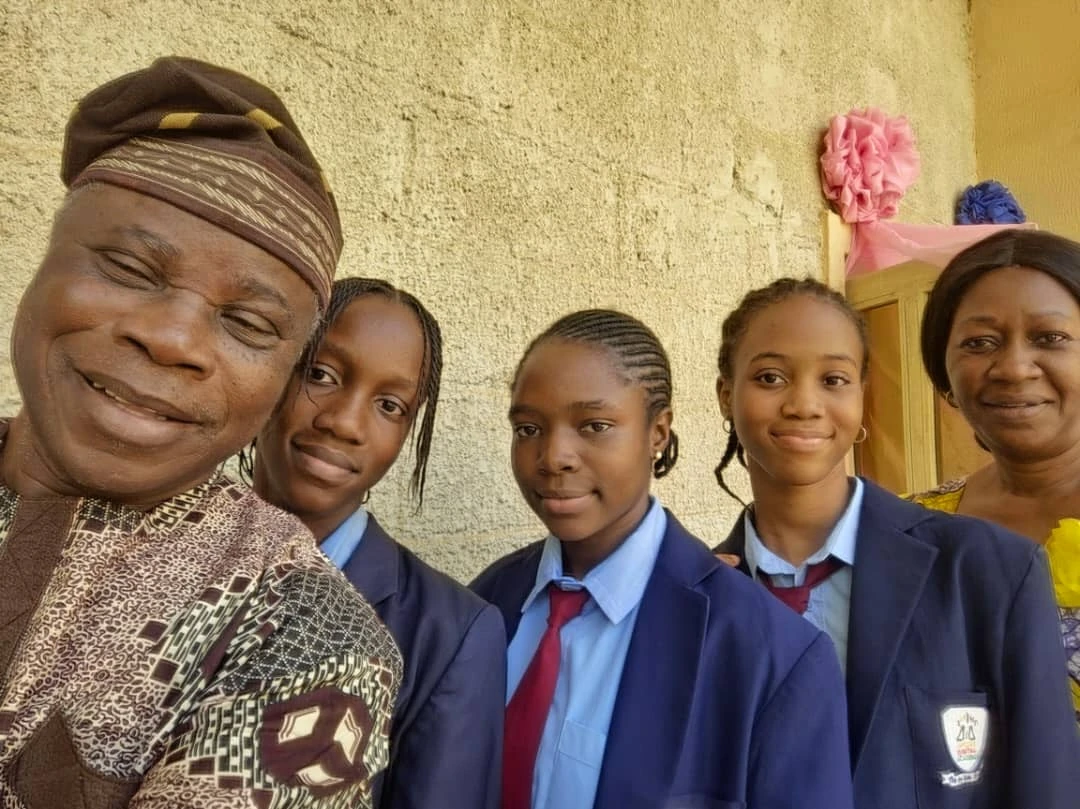
Dr. Akin Fapohunda, Ph.D., FNCS, is the Managing Director of Aflon Technologies Limited and the author behind many of the books in the Aflon website. A scientist, technologist, educator and author, he has spent more than fifty years in service to Nigeria across the public and private sectors, and for much of that time he has worked to bring the knowledge of computers and technology within reach of every Nigerian.
A scientist in public service
Dr. Fapohunda trained in Agronomy at the University of Ibadan (B.Sc., 1975), in Remote Sensing and Environmental Monitoring at the University of Wisconsin–Madison, USA (M.Sc., 1980), and in Digital Soil Variability Studies at the University of Ibadan (Ph.D., 1986), with specialised training at the NASA Technology Application Centre in the United States and the International Institute for Aerospace Studies in the Netherlands. Beginning in the Federal Ministry of Agriculture in 1976, where he applied computer models to soil science and environmental monitoring, he went on to serve as pioneer Head of Computer and Information Services at the Raw Materials Research and Development Council (1989), and as pioneer Director of Planning, Research and Data Bank at the National Agricultural Land Development Authority (1992). He concluded his public service career as Director of the Space Science Office in the Presidency (1999–2000), helping to lay the foundations of Nigeria’s satellite and remote sensing capabilities.
A builder of digital skills
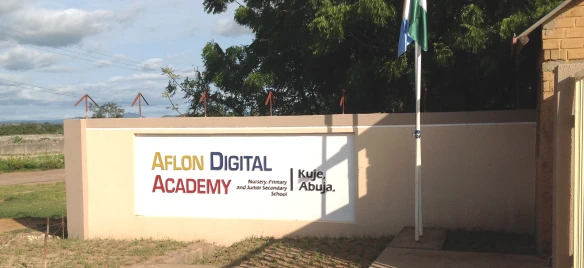
From 2001, Dr. Fapohunda turned his energy to training Nigerians in information technology. He founded and directed the Aflon Digital Group, comprising an Academy, a College and an Institute in Kuje, Abuja, which trained more than 16,000 graduates in a wide range of IT disciplines. He served as IT Competency Evaluation Consultant to the Office of the Head of the Civil Service of the Federation for the selection of Permanent Secretaries, and as a Visiting Senior Lecturer in Multimedia Technology and Digital Image Processing at Bingham University (2009–2018). A Fellow of the Nigeria Computer Society, he has represented the Society on the Computer Professionals Registration Council of Nigeria and chaired its IT Curriculum Review Committee.
An author for every learner
Throughout his career, Dr. Fapohunda has written and published simplified computer science books that make technology easy to understand for beginners, beginning with Aflon’s Computer Appreciation titles of 1996. That same conviction, that clear, well-structured books can open the door to learning for anyone, lies behind the Aflon Self-Study Learning Series Books now offered on this website, written to the NERDC 2025 schemes of work for students from JSSC 1 to SSSC 3.
Leading the next revolution
Since January 2026, Dr. Fapohunda has devoted himself to promoting and popularising artificial intelligence and robotics in Nigeria through the Aflon Centre for Artificial Intelligence and Robotics (ACAIR). His work includes advocating the integration of AI into Nigerian education and public service, and establishing innovation hubs for practical robotics in agriculture and industry. The Aflon Artificial Intelligence and Robotics series for secondary schools is one fruit of that mission: to prepare young Nigerians not only to use the technologies of the future, but to build them.
Dr. Fapohunda lives in Abuja. He welcomes enquiries from schools, educators and partners through director@aflon.org.
About Aflon Organisation and Books
Aflon: Publishing Technology Books Since 1996
Aflon has been publishing technology books for Nigerian learners since 1996. In that year, when personal computers were still rare in Nigerian homes and schools, Aflon released a series of Computer Appreciation titles with one clear aim: to introduce Nigerian students to computer technology and to show them that the new digital world was open to them too. Those early books helped a generation of young people take their first steps with the computer, at a time when few learning materials on the subject were written with Nigerian students in mind.
A commitment that has grown with technology
In the years since, technology has moved from the desktop computer to the internet, the mobile phone, cloud computing, and now artificial intelligence and robotics. Aflon’s commitment has remained the same: to explain new technology in clear, simple language, to ground it in Nigerian life, and to make it practical, so that learners do not only read about technology but use it, build with it and earn a living from it. That commitment is also expressed through the Aflon Centre for Artificial Intelligence and Robotics (ACAIR) in Kuje-Abuja, which promotes AI and robotics education in Nigeria.
Today’s technology books
Aflon Books now publishes complete six-year technology series for secondary schools, from JSSC 1 to SSSC 3. The Digital Technologies series is written to the NERDC 2025 Scheme of Work and covers computer hardware and software, networks and the internet, programming, data, cybersecurity, web and mobile development, digital entrepreneurship and emerging technologies. The Artificial Intelligence and Robotics series, built on Aflon’s own scheme of work modelled on the NERDC structure, teaches students how intelligent machines work, how to program in Python, how to build simple robots, and how to use AI safely and responsibly. In the new trade subjects, the Computer Hardware and GSM Repairs and Solar PV Installation and Maintenance series turn technology into practical, employable skills. All are Self-Study Learning Books, written so that a student can learn step by step, with or without a teacher, and so that schools without specialist teachers or full computer laboratories can still teach these subjects well.
What makes an Aflon technology book different
Every topic is taught by doing. Students write and run real programs, take apart and repair real devices, design websites and simple apps, and work through case studies drawn from Nigerian banks, farms, hospitals, markets and homes. Where a school has few computers, the books show how activities can be carried out on a smartphone, a shared computer or a community ICT centre, and offer paper-based alternatives such as tracing a program by hand or drawing a network. Safety, data privacy, ethics and the responsible use of technology are taught alongside technical skills, so that students learn not only how technology works but how to use it well. Each book covers a full school year in one volume, follows the national calendar week by week, and ends each term with self-assessments and full model solutions, so that progress can be checked at every step.
Looking ahead
Thirty years after its first Computer Appreciation titles, Aflon’s purpose is unchanged: to prepare young Nigerians not only to use technology, but to understand it, to create with it, and to lead in it. We invite students, parents, teachers, schools and education authorities to explore our technology books at www.aflon.org, and to join us in building a digitally confident Nigeria.
Published By
Aflon Books
Plot 9, 11 and 12 Akin FAPOHUNDA Way.
Sector Centre B Layout,
Kuje-Abuja.
www.aflon.org · director@aflon.org · Tel: +2348033121004
© Aflon Technologies Limited, November 2026
Publishing history
The Evolution of Textbook Production and Publishing in Nigeria
From the Analogue Era, through the Digital Revolution, to the Age of Artificial Intelligence
1. The Analogue Era – The Foundation of Textbook Publishing
In the years before computers became widely available in Nigeria, particularly from the colonial period through the 1980s, textbook production depended mainly on labour intensive manual processes. Authors prepared manuscripts by handwriting or typewriting, while editors, illustrators, typesetters and printers carried out different stages of production. Pictures and diagrams were drawn by hand, corrections were difficult to make, and printing required expensive equipment and materials. Many textbooks used in Nigerian schools were originally produced by foreign publishers, although Nigerian authors and indigenous publishing companies gradually became more involved in writing and producing books suited to local educational needs. This period laid the foundation for textbook publishing in Nigeria, but producing and updating textbooks remained slow, expensive and demanding.
2. The Digital Era – The Revolution in Book Production
From the late 1980s and particularly during the 1990s and 2000s, the growing use of personal computers brought major changes to Nigeria's publishing industry. Typewriters gradually gave way to word processors, while computer-based page design, digital photography, scanning and modern printing technologies replaced many manual production methods. Authors could now write, correct and improve their manuscripts more easily. Publishers could prepare attractive pages, insert colourful illustrations and produce textbooks within shorter periods. The spread of the internet also made it easier to obtain information, communicate with authors and distribute educational materials electronically. Nigerian publishers increasingly gained access to technologies that had previously been difficult or expensive to use. However, researching subjects, developing lessons, preparing exercises and checking educational content still required extensive human effort. The major achievement of the Digital Era was transforming how textbooks were prepared, designed, printed and distributed, while the development of their educational contents remained largely a human responsibility.
3. The Artificial Intelligence Era – The Transformation of Textbook Development
Beginning in the early 2020s, and accelerating with the arrival of powerful generative Artificial Intelligence systems, textbook publishing entered a new stage of development. Unlike earlier technologies, which mainly helped people type, design and print books, AI can also assist authors in developing the actual learning contents. It can help explain difficult subjects in simple language, organise lessons, prepare examples, generate illustrations, suggest practical activities and develop exercises with worked solutions. These capabilities can greatly reduce the time required to prepare comprehensive learning materials, although teachers, subject specialists and editors must carefully check the accuracy and quality of AI-assisted content.